Document & Text Extraction
Reading information from scanned documents, forms and images so it can flow into your systems.
- Optical character recognition (OCR)
- Field and table extraction
- Validation and review steps

Intelligent Systems
We help organizations explore and build computer vision capabilities, from reading documents to detecting objects and checking quality, designed around your environment and privacy needs.
Where It Helps
Computer vision can help wherever people currently look at images, documents or video to find or record information.
We extract fields and tables from documents and route uncertain results to a person for checking.
Document & Text ExtractionWe help flag items that may need a closer look, while people make the final call.
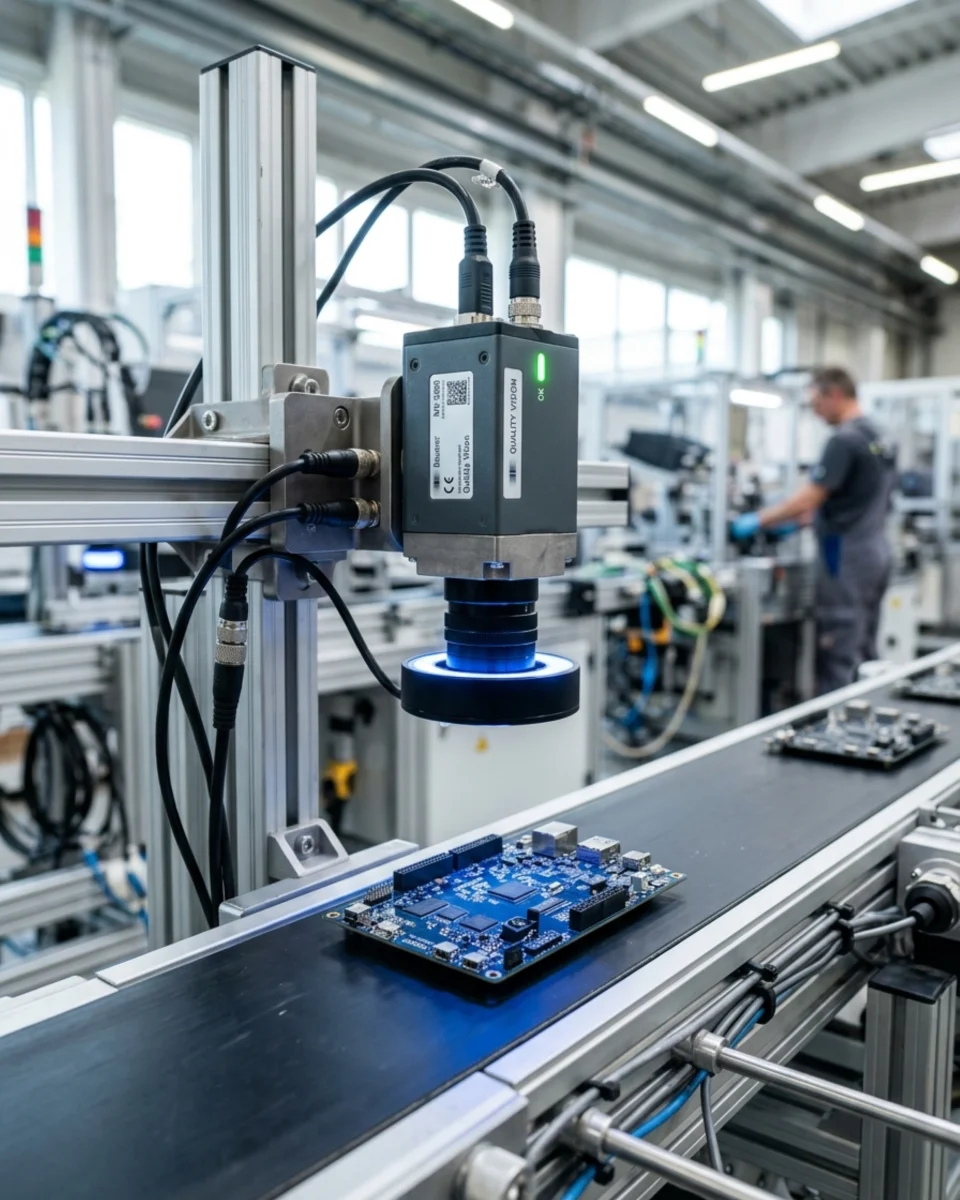
Visual Quality InspectionWe train and test models to identify and count the items or events that matter to you.
Object Detection & ClassificationWe design where models run and how results are recorded, with privacy requirements in mind.
Deployment OptionsCapabilities
Solutions are designed around your cameras, documents and privacy requirements rather than a fixed product.
Reading information from scanned documents, forms and images so it can flow into your systems.
Identifying and counting items, events or conditions in images and video.
Supporting inspection tasks by flagging items that may need a closer look.
Running vision models in the cloud or closer to cameras and devices, depending on your needs.
How We Work
Vision projects depend on representative images, so data collection and labelling are planned from the start.
We agree what needs to be detected or read, and under what conditions.
OutcomeA clear task definition and acceptance criteria
We collect sample images or documents and plan how they will be labelled.
OutcomeA representative, labelled dataset
We train an initial model and review its results with your team.
OutcomeMeasured results on your own examples
We run the model in the agreed environment and set up review of unusual cases.
OutcomeA working solution with human review where needed
Related Services
Not always. Many tasks work with existing cameras, scanners or phone images. We review sample material early to see whether it is suitable or whether changes would help.
Privacy is considered from the design stage, including what is captured, where it is processed, how long it is kept and who can access it, in line with your policies.
Usually it supports people rather than replacing them, by flagging items for review or extracting information for confirmation. The right balance is agreed with you.
Intelligent Systems
Describe the visual task and the material involved, and we can discuss a practical first test.
